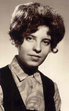
LUDMILA
PEDDE- MY LIFE STORY.
By her son,
Sergey Pedde
PART
1 MY FATHER
German
families in Russia
are always large families. So is mine. It’s great to have many
relatives
who love you and to whom you can give all your love.
My
grandfather August Pedde was born
on
March 14 in
1891. His wife Ida Pedde,
nee. Harke was 6 years younger than
he. She was born in 1897 on the 22nd
February.
My
father’s family included four brothers and two sisters. Papa’s
parents were German emigrants, who came to Wolhynien,
a territory in the northwest area of the Ukraine, where
many Germans lived. My father Bernand
Pedde (SEE HIS PHOTOS) was born on the 3rd of August, 1924 in a small German village called
Kobelanke in
Zhitomirskaya Oblast. I’ve
never been there. But
my father told me how beautiful those places were. His parents -- Ida
and August
Pedde -- were reasonably well off, materially. They even owned some
cows and horses, something rare during those times. My Daddy used to
care for the animals. Daddy had an
elder brother, named Robert
Pedde (SEE HIS PHOTOS), who was born on
the 4th of January 1919.
Later on, my Dad’s sisters were born. Estra
Pedde (SEE HER PHOTOS)
was born on September
the 14th, 1934 and the youngest Alma Pedde (SEE HER PHOTOS)
on May the 25th, 1938.
I don’t
remember the birthdates for his brothers David and Richard.
Papa’s
parents gave him a beautiful name -- Bernand. It was not a mistake.
When Bernand grew up, he became a very beautiful young man, the most
handsome
among the boys in the family. He had indescribably nice deep-blue eyes,
colored of
Heaven. That’s why Ida and August gave him the nick-name “Beno.” In
Italian, it
means “beautiful.” His sisters and brothers, and even friends of
Bernand, called him Beno, too.
The First World
War has brought hunger and
need. The Peddes didn’t want to leave their home, but they wereforced
to by the new Soviet Government which came into place after the Russian
Revolution and the Czar was deposed.
They
left
their own home with the open fields and horses for an unfriendly and
very cold Siberia.
There was a place there where German colonists lived. My grandparents
didn’t like the new place, but there was no other
choice.
My Opa
built a new large house, where the whole family had to live. Later on,
he
bought some horses again. He couldn’t imagine his life without them.
Very
soon
after the Second World War was started, many things changed
for the worse again. On the 28th
of August 1941, the Soviet Government enacted a new
law. According to this this horrible document, every person of German
nationality was to be considered an enemy for the Soviet
people. Now, even after so many years, I still
can’t understand why they were guilty and of what crime. No-one can
understand why millions of Germans
from the Volga regions of Wolhynia were taken away from their homes by
the state
administration and displaced to Ural, Siberia and Kazakhstan.
Why
did the administration rob their houses and kill many
thousands of those who
didn’t want to leave their new Russian Motherland? We will never know
why it
happened, because no-one says the truth.
My
Daddy
was also now a grown up young man of age 17. He was told to come to the
Rayon
Special Commendatory. The Head of the department of this KGB structure
told my
Dad and his brothers that they must work at the Trudarmy. They were
to work like slaves at the most harmful factories in the
forest. There was a
special paper that they had to sign. The
document totally
limited their rights. My Dad had no right to leave his
Zwangsaussiedlung (forced settlement.) If tried to do this, he
could be shot as punishment.
My
Father
got opportunity to leave Siberia
for Ural sometime
later. It was allowed because there were also same Zwangsaussiedlungen
in Ural.
So, he left his father’s home after 1945. His new place to live in was
a small
town in the North of the Permskaya Oblast, called Krasnowischersk.
PART
2
MY
MOTHER
I know very little about my mother. Her short
life story is as tragic as the story of millions of other Germans of
the Soviet Union
before and after the Second World War. My mother, Maria Bergmann, was
born in Wolhynien, a territory, which now
belongs to the Ukraine.
Her father Johann Bergmann was a German emigrant from a beautiful place
in Austria
called
Gleisdorf. He came to the Russian Empire just before the First World
War to
work as an engineer. His wife was a teacher of the German language.
Both were very well educated.
The
place
he chose to live was the place where had lived mostly Germans from
different
historical territories -- Pfalz, Hessen, Westfalia, Friesland,
Prussia.
After the year 1917, when communists came to power, he could
not accept the
Soviet ant-ihuman ideologies, and so he was sent out from
Wolhynien, with
his wife, for Ural, Permskaya Oblast, one of the four locations in the
Soviet
lands where Germans had to live and work. Maria was a little girl at
that time.
She was born in 1923. From 1925 on,
the
Bergmanns had to stay in the city of Krasnowischersk,
which became a Zwangsaussiedlung for Germans and other repressed small
folk
groups of the Soviet Union.
My
Opa
Johann was never friendly with the communist party and he used to fall
into criticism of the anti-German policy in the Soviet Union. One
night, Johann and his wife, my Oma, were taken out to the Special
Commendator. The next day, little Maria got
news from there: her parents had been shut and killed by those
commendators who
had taken them away.
Maria
could
not speak Russian and she didn’t know what to do. The same day she ran
away
from home. An old Russian lady encountered Maria, some weeks
later, in the
forest. She was in tears, weak, and near death. The old woman knew the
Bergmanns and
wanted to save the girl from hunger and death. The woman took her to a
Kindergarten for children who had lost their parents. She told the
director not to
tell the authorities about Maria, as that would have
endangered her life. The commendators could have taken
the girl away and killed her too, as they had done with her parents.
The old woman
explained that Maria was a daughter of the German parents who had been
shot and that she must be hidden
under the roof of the kindergarten.
Maria got the new name there
-- Schewtschenko.
It is because she was from the Ukraine.
Schewtscenko is the most common name there. She got a new birth
certificate, so
that no-one would know she was German.
Maria
lived at this Jugendheim (juvenile home) until she
was 18. After such an unhappy childhood, her health was absolutely
broken. But no-one
was there to help her. She was alone. She had so many illnesses that it
was almost impossible for her to work at all.
However, she had
to support herself somehow. Who would give as much as
a slice of bread to the young girl? She got herself hired at a
very poisonous factory which produced paper, cartons, and wooden
goods. Dirty waters, poisoned smoke, trash, rats, cockroaches and other
contaminants were all around her. It was unbelievably cold inside the
factory, -40C
in winter. She had to
work 12 hours each day, wearing very old and poor clothes. No weekends
off for restl. I fear to imagine how my mother could work in
such inhuman conditions.
One day
she met my father in the factory. His work was as difficult as
mother’s.
Germans had to do the most dirty work. My parents were friends from the beginning.
Then they fell in love with each other. One day, mother’s doctor said
she must
not have children. It would endanger her life. But my parents’ love
was strong and she wanted a baby for herself and my father. She ignored her
illnesses and took the decision to have a baby, a symbol of her love with my papa.
My parents came to the
Commendatory to ask for
registration of their marriage.
You two? You German-speaking fascists? Get out immediately! We’ll never
let you
marry officially. Don’t you know the rules for you bloody Germans?
Out! - those were the last words that my
parents heard in the corridors of the Commendatory.
The
rejected
pair didn’t give up. They decided to have a baby “so wie so” (just the same). It was in
1948,
less than four years after the Second World War, when Germanophobia was still all
around.
My
parents
still worked at the same factory, hand in hand together. The harmful
atmosphere won. My mother developed a very serious heart condition while she was
working and
awaiting her baby.
On the
18 of December 1949 Maria bore a
girl. (SEE HER PHOTOS)
It was me, a premature, 7 month baby. I
had few chances to
stay alive. Mother was totally ill and I was born 2 month before I was
due. Mama couldn’t work anymore. After she delivered me she
had to
stay in bed all day long.
My daddy took
care of her. They were very poor at that
time, so my Opa August and Oma Ida helped my parents. Opa was not there for
long. He died in 1950 of hunger
and
cancer. (SEE HIS TODESURKUNDE). Aunties Estra and
Alma were also nearby.
Mama’s
heart became weaker and weaker. In
1950, one horrible day for my Daddy, she died at age 27. I was an 11 month
old baby
at that time.
Father remembered that feeling for many
years later. He told me that his life stopped after my mother’s death,
too. There
was no wish to live anymore.
Four
long years of nights and days he
couldn’t forget the greatest love of his life. Besides, the result of their
love, their child,
was always in front of his eyes. I was always there to remind him of his Maria. God
had
given me my mother’s eyes. I can understand how he felt looking into my
eyes. I
think Papa saw my Mother’s eyes when he looked at me. His eyes
were always
full of love and tender. He told me this a thousand times:
"Luschen, du
bist so perfekt aus. Genauso schoen wie
deine Mutti." (You are so perfect, as beautiful as your mother.)
I
will never forget his words. Never forget. They were so important to
me. I
always tried to imagine what my Mother looked like. But the only photo
of hers I
ever had is a photo of her at her own funeral.
PART 3 MY
CHILDHOOD
In
1952,
Papa met my step-mother Raissa
Litwinowa (SEE HER PHOTOS). So my half-brother Wolodja (SEE HIS
PHOTOS) was born on the 19th
of January, 1953. Papa
and she were also not married, for the same reason mentioned earlier. But my step-mother
was
luckier than my biological mother. She took my father’s name --
Pedde.
Raissa
never loved me. I suppose she was simply jealous about me. My father
never kept
silent about his love to Maria. Raissa knew everything about their
relationship. Papa was too honest, I think. I don’t know if it was a
mistake, but the truth was his life's motto. I adored him for this. He used to
teach me to
be honest in every way.
I
grew up also to be a very weak girl. But I never lost optimism and belief in a better
future. I’m that sort of person.
My
step-mother thought I was happy enough.
She wanted me to do the most difficult work in the house, from childhood on. I had
to clean the floor with a knife and a “Lappen” (wash cloth) every day; I had to
bring 2 very
heavy canisters of water from the neareest street “Kolodec” (pump); I had to
cook and do
many other things which little girls of my age usually don't have to do.
"Ich
sollte
keinesfalls an mein Leben klagen. Und
meine neue Mutter hat’ nie gesehen wenn ich weine." (I was never
allowed to complain about my life and I never let my new mother
see me cry.)
When I went to
school, she never bought stockings,
socks or pants for me. I used to wear a coat which my daddy had given
to me.
That was all. I was almost nude going to school. Raissa didn’t care if
I
got a fever or caught a cold. At that time, winters were very cold in Krasnowischersk, -40 degrees Centigrade and
even
colder. She had no interest in how it went with me. I never knew the taste of
sweets
or candies. She bought them for herself or her friends only. I never
received
a real Mother’s tender care and love from her.
However
I was a
girl full of mental energy. I
loved to listen to the radio and dancing. I liked to imagine myself a
ballet dancer. My father’s brothers and sisters as well as Oma
Ida liked to watch me dancing. I was not tall at age 6 - 7, and I
used to
take a
chair for making a “dance show”. I liked to show different exercises on
the
chair. My relatives always laughed on me. They liked to watch a little
talented
actress and dancer, but they were afraid I might break my
foot or an arm.
Oma or
one of my uncles started to stop me:
"Ach,
Luschen, du kannst entweder deine Haende oder
dein Kopf zerbrechen. Hoer auf! Genug fuer Heute! Morgen darfst du
wiederholen." (Sweetie, you can break your hands or your head. Stop for now. Tomorrow you can perform again.)
I
still hear these words inside my mind. Those were the real moments of
fun and
happiness for me.
The other passion
of my life I found in
reading books. German families like ours were not allowed to leave their
Zwangsaussiedlungen.
It was a law written in Vertriebenengesetz (Law for Displaced Persons.) The only place I ever saw was Omskaya Oblast (SEE VIEWS OF
THE
PLACE), where my grandparents had lived. Those were also
German Zwangsaussiedlungen
in Moskalenskij Rayon (SEE
PHOTOS
OF THE PLACE). So I could not know more than I was allowed to see.
So, I
decided to read as many books as possible.
German books were not available to me at that time, excepting some
religious titles
and the Bible of my Oma Ida. I liked learning new stories and
fairytales.
Finally I started reading serious literature works of my favorite
authors. I
was one of the best in literature in our school. I dreamed to get
a higher
education and wanted to be a teacher of the Russian language and literature.
But my dream never would come true. My step-mother never respected my
choice to
be an educated person. She wanted me to stay in town to do the housework. She
even didn’t like it when I used to speak German with my paternal
relatives. She was
like that. And even my Daddy, her own husband, couldn’t change her
character. It
was an impossible thing.
PART 4
HOW I
GEW UP
I adored reading books. It made time pass. I was a respected pupil in my class. But I didn’t
want to
demonstrate how I loved music and singing. My Oma Ida loved to sing very
much,
so she taught me different German folk songs and religious hymns. I
liked to
hear when she read me the Bible, which I still keep on my bookshelf at
home.
But now the book belongs to my son Sergey, to remind him who he is and where he comes from.
In
1959 my dear Oma Ida died at
age 62 (SEE TODESURKUNDE) of the same reason like
her husband. She never
ate enough for a long time, and she died of cancer.
Papa
worked very hard at that time, as usual. I was
proud of him, because he was one of the best specialists at his
factory. So his
photo was hanging on The Board of Honor of the Krasnowishersk
Cellulose
and Paper Producing Factory.
One day
he lost his Inland pass. When he came to the Commendatory, he was
asked about his name to give him a duplicate of the document. He said:
“Ich bin
Boris Pedde.” (My name is Boris Pedde.) My father didn’t want anybody to know he was German.
I can
understand why he did this. Anyway, he was a well known person in town.
His
friends didn’t accept his new-chosen name. He remains to be Beno for
everyone
who knew him closer.
Time flew very fast. I
finished school. We had no money for my education. I had to go to another
Ural
region -- Sverdlovsk
city. I was completely alone there. I knew nobody with whom I could relate. I
passed examinations to the Sverdlovsk Technical Higher School. I
learned to be a
Technologist of the Rubber Industry. It was not of my interest. I even
hated
what I studied and it was far from my taste. But there was no other way
out for
me. I was hundreds of kilometers from home. So I had to find a job to
feed
myself. I entered a new and a very interesting profession -- Buchhalterin
(bookkeeper) at a
factory producing delicatessen meats, sausages and so on. But to
tell the
truth -- I’ve never eaten any of those products. They were too
expensive for
me.
I could study in the evenings only, because I was busy with my work all
day
long.
One
horrible day I received a shocking message from Rostovskaya Oblast. My
father
had died on the 30th of
January
1971 (SEE HIS TODESURKUNDE). He had moved
back home from his working
place on the bridge. His heart had stopped beating for a few seconds. He felt
bad and couldn’t keep his balance. He fell down from the bridge into
the
waters of the river. He was asphyxiated.
I don’t know how
to express my feelings. I
was so much shocked, that I could neither cry nor say a word. I just
saw
him for the last time in my life.
It’s not true that time helps to forget
the pain of losing. How can the dearest persons in the world be forgotten?
I became absolutely alone. I
felt my life had
ended after my father’s death. I still can’t remember him without
tears. He
is always in my dreams. My beloved Daddy.
PART 4
I LOVE MY FAMILY
I
finished
my studies one year later, in 1972. I had to build my own career. So I
went to
Saratovskaya Oblast, to a small city named Balakovo. A couple of months
later, I
was invited to work at a newly built, young and indescribably beautiful
town, 10
kilometers away
from Volgograd. I liked the new place
immediately. The town named
Volzhskiy
(SEE PHOTOS OF THE CITY) was full of youth and optimism. It was a
very sunny and green location. I’ve never seen so many modern and nice
buildings.
Trees and flowers in blossom were all round.
I
liked the
hostel I lived at. We were a real family, all together with our neighbors.
One
year
later, I moved out to another hostel, nearby on the same street. I met
my
future husband there. Nikolay was a handsome young man of the same age to
me. One
year later we got married. On the 9th
of May 1975 our son Sergey
(SEE HIS PHOTOS) was
born.
32
years
together, and another sudden loss. My husband died on the 8th
of
December, 2006.
That’s
enough. Can’t tell about my losses any more. The heart aches too much of
such
memories.
What
is my
life like? I have no answer to this question.
I’m
happy
having my son, my relatives, my friends, brothers and sisters in God.
What
else
can someone dream about?
I’m
a
Pedde, and I’m a part of our family history, a rich and unusual history.
God
bless my nearest people. I remember you all, my dears!
Yours, Ludmila Pedde (SEE
HER PHOTOS)
Volzhskiy city, Volgograd
territory, Russia.
April 2007.
|




 Ludmila Pedde
Click for Russian version
Ludmila Pedde
Click for Russian version